

Comprehensive coverage is a type of auto insurance that pays for damage to your car caused by events outside your control, such as theft, vandalism, fire, or weather. Unlike collision coverage, which deals with crashes, comprehensive coverage protects your vehicle from the unexpected things life throws at it when you’re not even behind the wheel.
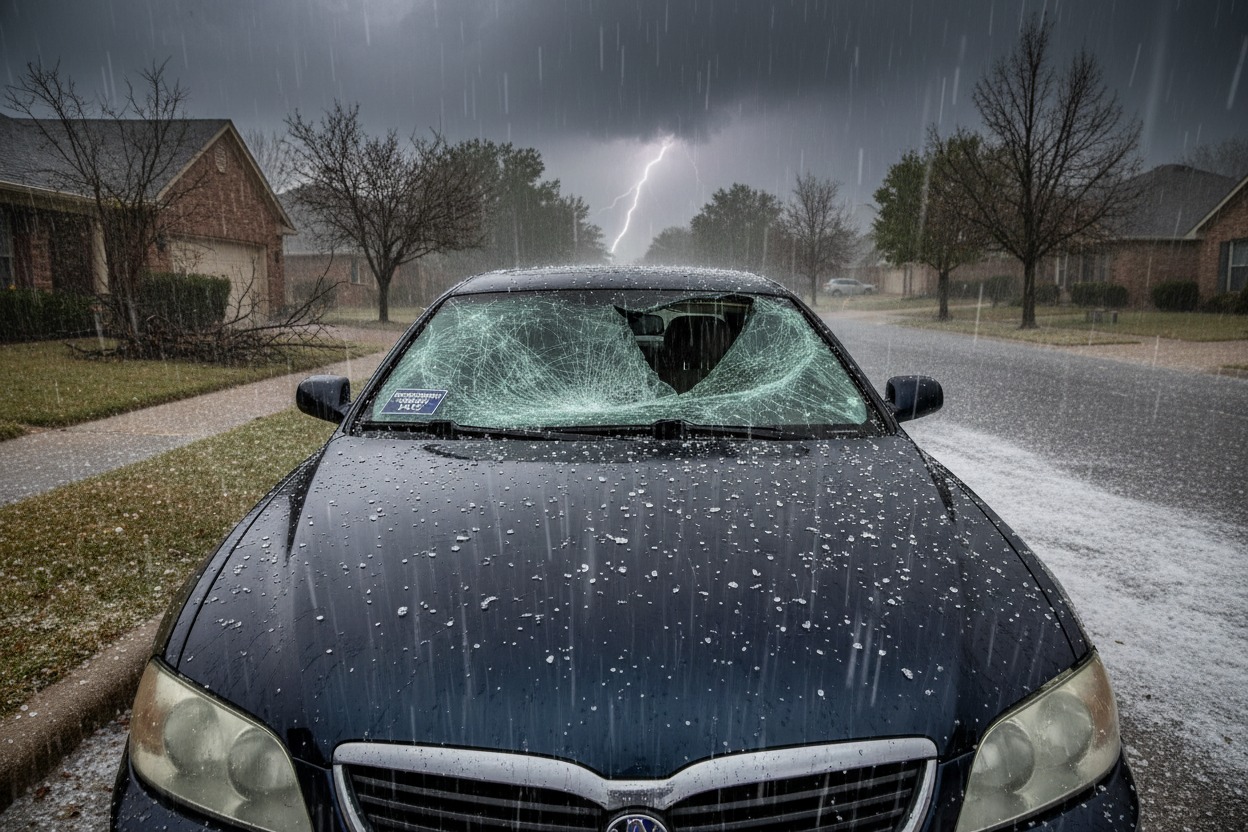
Image description: A car parked outside during a hailstorm, with dented hood and shattered windshield, illustrating weather-related damage covered by comprehensive insurance.
What Does Comprehensive Coverage Actually Include?
Comprehensive coverage is often called “other than collision” coverage because it steps in for almost everything a crash policy won’t touch. Here’s a breakdown of common covered events:
| Covered Event | Example Scenario |
|---|---|
| Theft | Your car is stolen from a parking lot |
| Vandalism | Someone keys your paint or breaks a window |
| Fire | Your vehicle catches fire from an electrical fault |
| Natural disasters | Flood, hurricane, hailstorm, or wildfire damage |
| Falling objects | A tree branch falls on your car during a storm |
| Animal collisions | You hit a deer on the highway |
| Glass damage | A cracked windshield from flying debris |
| Civil disturbances | Damage from riots or civil unrest |
If the cause of damage wasn’t a collision with another vehicle, there’s a good chance comprehensive coverage applies.
What Comprehensive Coverage Does NOT Cover
Comprehensive coverage is broad, but it isn’t unlimited. Knowing its boundaries helps you avoid surprises when filing a claim.
| Not Covered | Why |
|---|---|
| Collision damage | Handled by collision coverage instead |
| Mechanical breakdowns | Considered normal wear and tear |
| Personal belongings stolen from the car | Usually covered by home or renters insurance |
| Injuries to you or others | Covered by liability or medical payments coverage |
| Driving under the influence damage | Often excluded or limits liability payout |
Image description: A side-by-side comparison graphic showing one car with hail damage (covered) next to two cars in a collision (not covered by comprehensive).
Comprehensive vs. Collision Coverage
People frequently confuse these two coverages because they’re often sold together. Here’s a quick comparison to clear things up:
| Feature | Comprehensive Coverage | Collision Coverage |
|---|---|---|
| Covers theft | Yes | No |
| Covers crashes with other cars | No | Yes |
| Covers weather damage | Yes | No |
| Covers hitting a pole or fence | No | Yes |
| Covers animal strikes | Yes | No |
| Required by lenders for financed cars | Often, yes | Often, yes |
| Required by law | No | No |
Most lenders require both comprehensive and collision coverage if your car is financed or leased, since they want to protect their investment from all angles, not just accidents.
How Much Does Comprehensive Coverage Cost?
The price of comprehensive coverage depends on a few key factors:
- Vehicle value: Pricier cars cost more to insure comprehensively.
- Location: Areas with higher theft rates or severe weather tend to have higher premiums.
- Deductible: A higher deductible usually lowers your monthly premium.
- Driving history: While comprehensive claims aren’t about driving behavior, your overall record can still affect pricing.
On average, comprehensive coverage adds a modest amount to a policy compared to liability-only plans, but it can save you thousands if your car is stolen or destroyed by a disaster.
Do You Need Comprehensive Coverage?
Comprehensive coverage isn’t legally required in most places, but it’s worth considering if:
- You live in an area prone to severe weather, flooding, or wildfires.
- Your car is parked outdoors or in a high-theft area.
- Your vehicle is financed or leased (your lender may require it).
- You simply want peace of mind against events you can’t predict.
If you drive an older car with low resale value, you might decide the premium cost outweighs the potential payout, since claims are limited to your car’s actual cash value.
Final Thoughts
Comprehensive coverage fills in the gaps that collision and liability insurance leave open. It’s the coverage that has your back when nature, thieves, or sheer bad luck rather than another driver cause damage to your vehicle. Reviewing your policy with these distinctions in mind can help you choose the right level of protection for your situation and budget.
Image description: An insurance agent handing car keys back to a customer outside a repair shop, symbolizing a successfully resolved comprehensive coverage claim.