
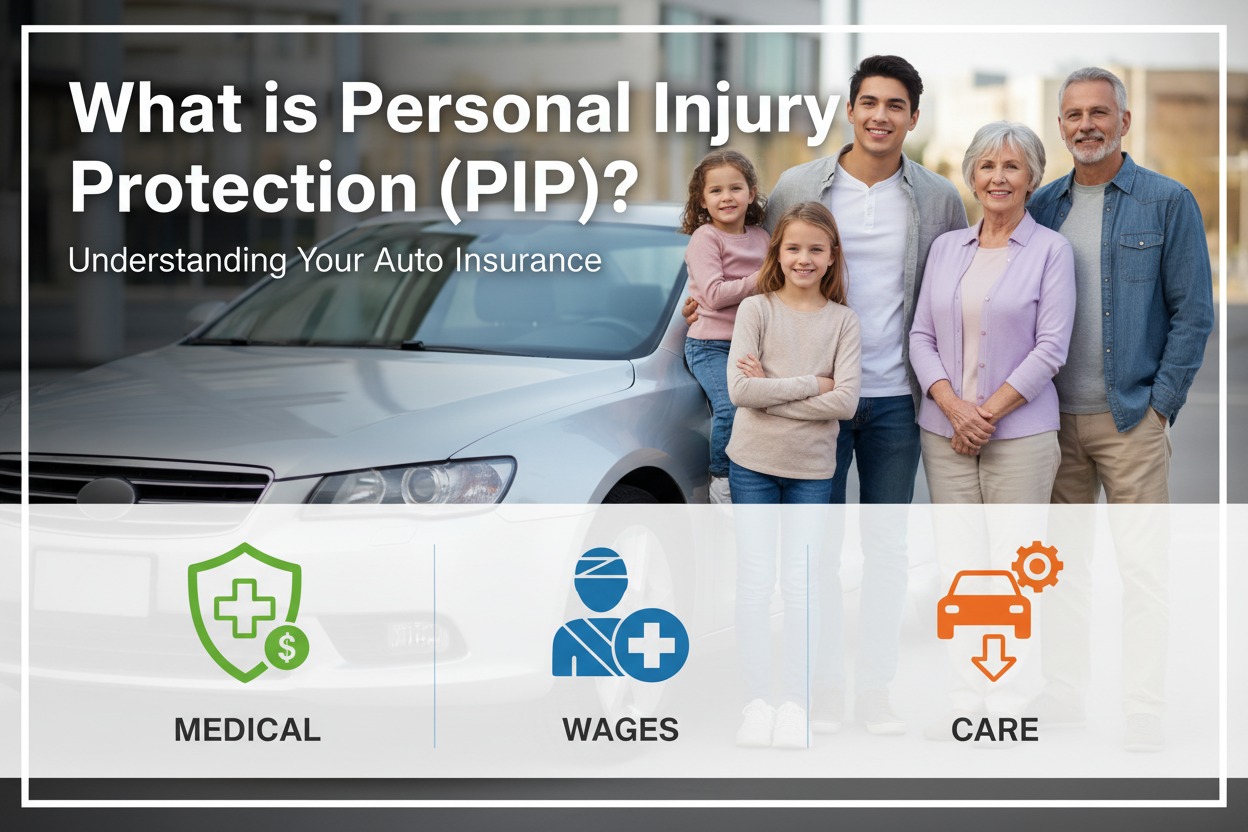
Personal Injury Protection (PIP) is a type of auto insurance coverage that pays for medical expenses and lost wages for you and your passengers after an accident, regardless of who caused the crash. Unlike liability coverage, which only pays for damage you cause to others, PIP protects you, your family members, and anyone riding in your car the moment an accident happens no fault determination required.
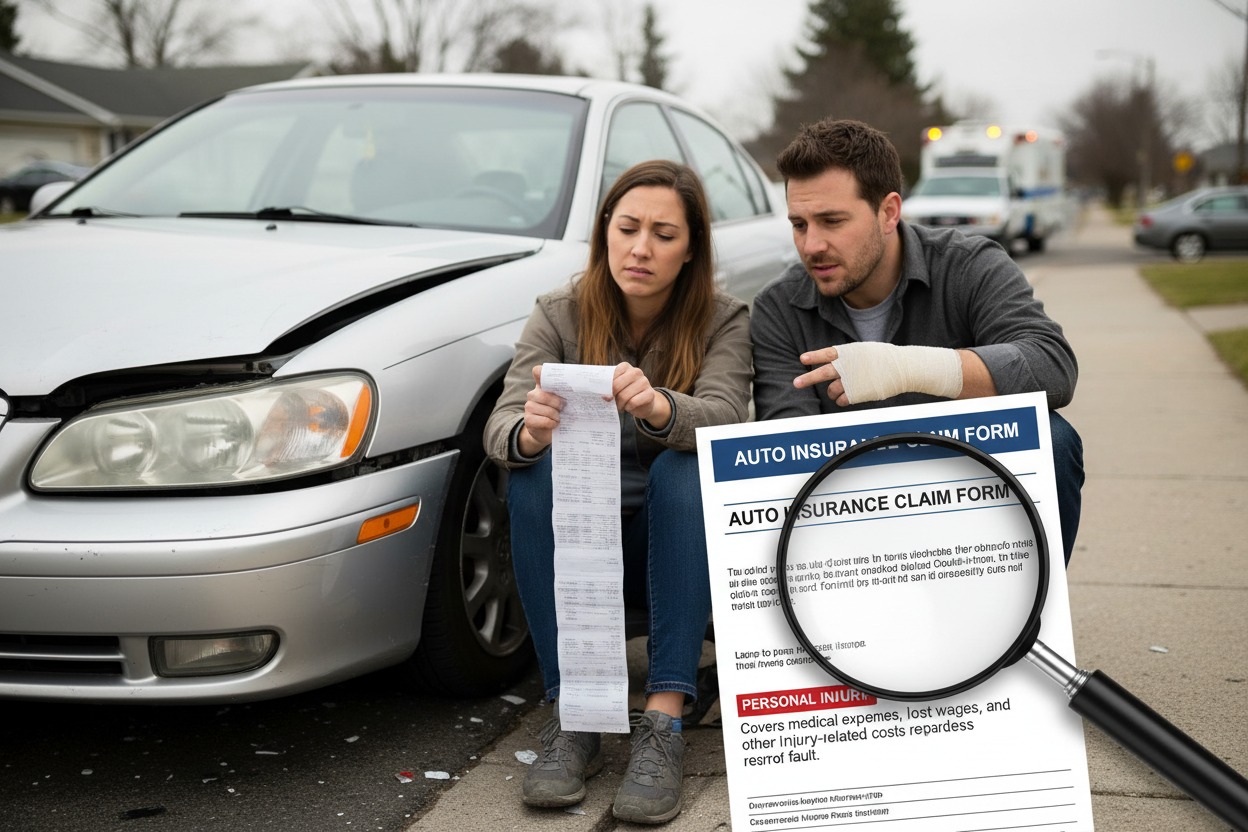
[Image description: A driver and passenger reviewing a medical bill and insurance claim form next to a car involved in a minor accident, illustrating how PIP covers injury-related costs.]
How Does PIP Work?
PIP is often called “no-fault” insurance because it pays out immediately after a covered accident, without waiting for an investigation into who was responsible. This makes it especially valuable in states with no-fault insurance laws, where drivers are required to carry PIP before they can sue another driver for damages.
Once a claim is filed, PIP funds can be used to cover immediate costs such as ambulance rides, hospital visits, and follow-up treatment, helping policyholders avoid financial strain while recovering. Because the payout isn’t tied to fault, claims are typically processed faster than traditional liability claims.
What Does PIP Cover?
PIP coverage generally includes:
- Medical expenses – hospital stays, surgery, doctor visits, physical therapy, and prescriptions
- Lost wages – a percentage of income lost while recovering from injuries
- Essential services – costs for replacement services like childcache or housekeeping if injuries prevent you from performing them
- Funeral expenses – in the event of a fatal accident
- Rehabilitation costs – ongoing therapy or long-term care related to the crash
PIP does not typically cover damage to your vehicle that’s handled by collision or comprehensive coverage or injuries to other drivers, which fall under liability or their own PIP policy.
Which States Require PIP?
PIP requirements depend heavily on your state’s insurance laws. States with no-fault systems generally require drivers to carry a minimum amount of PIP coverage, while states with at-fault systems may offer it as optional add-on coverage. A handful of states also use a hybrid “choice no-fault” model, allowing drivers to opt in or out of PIP.
Because rules vary widely, it’s worth checking your state’s Department of Insurance website or confirming directly with your insurer to see whether PIP is mandatory, optional, or unavailable where you live.
PIP vs. Other Coverage Types
| Coverage Type | Pays For | Covers Your Injuries? | Covers Other Driver? |
|---|---|---|---|
| PIP | Medical bills, lost wages | Yes | No |
| Liability | Other party’s injuries/damage | No | Yes |
| Collision | Damage to your car (any cause) | No | No |
| Comprehensive | Non-collision damage (theft, weather) | No | No |
| Medical Payments (MedPay) | Medical bills only, no lost wages | Yes | No |
[Image description: A simple side-by-side comparison chart showing icons for PIP, liability, collision, and comprehensive coverage, each paired with a short label of what it protects.]
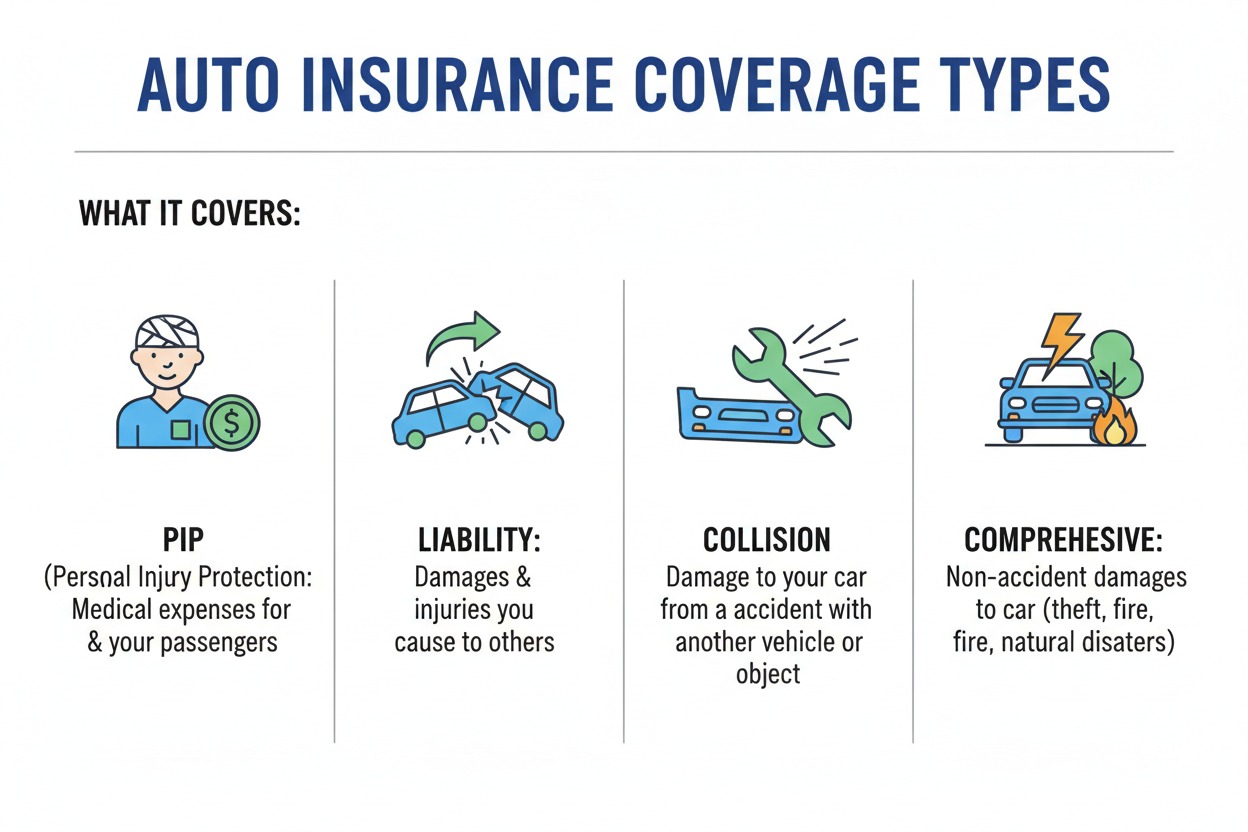
The biggest distinction between PIP and Medical Payments coverage (MedPay) is scope PIP usually covers lost wages and essential services in addition to medical bills, while MedPay covers medical costs only.
How Much Does PIP Cost?
The cost of PIP coverage depends on your state, the coverage limit you choose, and your insurer’s rates. In mandatory no-fault states, premiums tend to be built into the base policy cost, while optional PIP in at-fault states is usually priced as an add-on. Choosing a higher coverage limit increases your premium slightly but provides a larger safety net if you’re seriously injured.
Shopping around and comparing quotes from multiple providers is one of the most effective ways to find affordable PIP coverage that still meets your state’s minimum requirements.
Frequently Asked Questions
Does PIP cover passengers in my car? Yes. PIP extends to passengers riding in your vehicle at the time of the accident, in addition to you and qualifying family members.
Is PIP the same as no-fault insurance? PIP is the core coverage that makes a state’s no-fault insurance system work, though “no-fault” can also refer to broader state laws limiting lawsuits after accidents.
Can I still sue the at-fault driver if I have PIP? In most no-fault states, you can only sue if your injuries exceed a certain severity threshold defined by state law, even if you carry PIP.
Final Thoughts
Personal Injury Protection offers fast, no-fault financial support for medical bills and lost income after an accident protection that liability coverage alone doesn’t provide. Whether PIP is required or optional in your state, understanding what it covers can help you choose the right level of protection for yourself, your family, and anyone who rides along with you.