
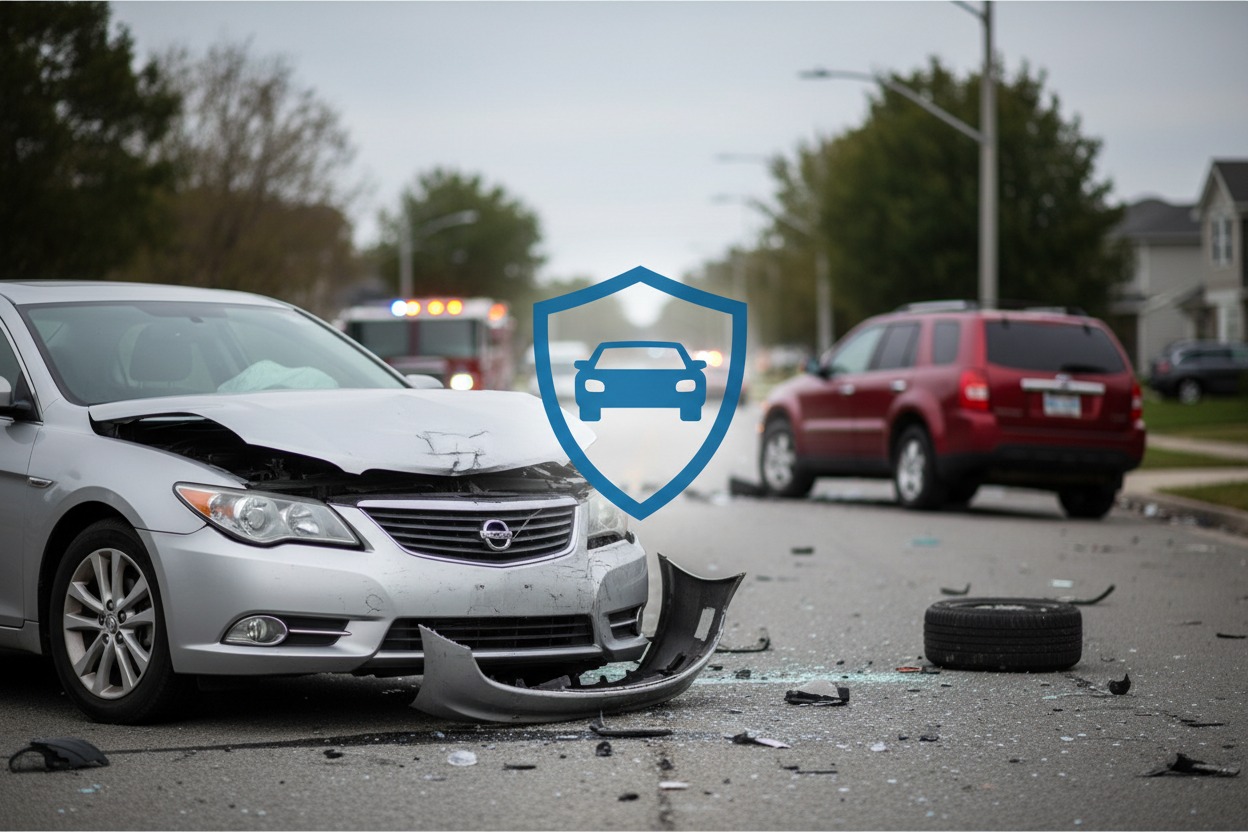
Collision coverage is the part of your car insurance policy that pays to repair or replace your vehicle after it’s damaged in an accident with another car or object, regardless of who caused the crash. Whether you rear-end another driver, hit a guardrail, or roll your car on an icy road, this coverage helps cover the repair bill or, if the damage is severe enough, the cost of replacing your vehicle altogether.

Image description: A close-up photo of a car’s front bumper with visible dents and scratches after a minor collision, parked on the side of a quiet street.
How Collision Coverage Works
Collision coverage kicks in after a covered accident involving your vehicle and another car, a fence, a tree, a pothole, or even a single-car rollover. Once you file a claim, your insurer sends an adjuster to assess the damage. If the repair cost exceeds your deductible, the insurer pays the difference up to your car’s actual cash value. If your car is declared a total loss, you’ll receive a payout based on its market value at the time of the accident, minus your deductible.
This coverage works independently of fault. Even if you caused the accident, collision coverage still pays out, which sets it apart from liability insurance that only covers damage you cause to others.
What Collision Coverage Includes
- Damage from hitting another vehicle
- Damage from hitting a stationary object, such as a fence, lamppost, or building
- Single-car accidents, including rollovers
- Damage from hitting a pothole or debris on the road
Image description: An insurance adjuster standing beside a damaged sedan in a repair shop, holding a clipboard and inspecting the dented hood.
What Collision Coverage Does Not Cover
Collision insurance has clear boundaries. It typically excludes:
- Weather and natural events: Hail, flooding, falling trees, or fire damage fall under comprehensive coverage, not collision.
- Theft and vandalism: These are also handled by comprehensive coverage.
- Injuries: Medical expenses for you or your passengers are covered separately by medical payments or personal injury protection (PIP).
- Damage to someone else’s property: That falls under your liability coverage.
- Normal wear and tear or mechanical failure: Collision coverage only applies to sudden, accident-related damage.
Because collision and comprehensive coverage handle different types of damage, many drivers carry both for fuller protection.
How Much Does Collision Coverage Cost?
The price of collision coverage depends on several factors:
- Your vehicle’s value: Newer or more expensive cars cost more to insure because repairs and replacements are pricier.
- Your deductible: Choosing a higher deductible, such as $1,000 instead of $500, usually lowers your premium.
- Your driving record: Drivers with a history of accidents or violations typically pay more.
- Where you live: Areas with higher traffic density or accident rates tend to have higher premiums.
On average, collision coverage adds a noticeable amount to a policy compared to liability-only coverage, but the exact cost varies widely between insurers and individual circumstances. Getting quotes from multiple providers is the best way to find an accurate number for your situation.
Image description: A person sitting at a kitchen table comparing printed car insurance quotes on a laptop screen, with a calculator nearby.
Do You Need Collision Coverage?
Collision coverage isn’t required by law in most places, but it may be required by your lender or leasing company if you’re financing or leasing your vehicle. Beyond legal requirements, here’s when it makes the most sense:
- You drive a newer or higher-value car: Repair costs can be significant, and collision coverage protects that investment.
- You couldn’t afford to replace your car out of pocket: If a totaled vehicle would create financial hardship, this coverage offers a safety net.
- You drive frequently in heavy traffic or bad weather: More time on the road means more exposure to accidents.
On the other hand, if you drive an older car worth only a few thousand dollars, the annual premium plus deductible might come close to or exceed the car’s value, making collision coverage less practical.
Choosing the Right Deductible
Your deductible is the amount you pay out of pocket before insurance covers the rest. A lower deductible means higher monthly premiums but less expense at claim time. A higher deductible lowers your premium but increases your upfront cost if you need to file a claim. The right balance depends on your savings cushion and how much risk you’re comfortable taking on.
Final Thoughts
Collision coverage protects one of your biggest assets: your vehicle. It steps in after accidents involving other cars or objects, covering repair or replacement costs no matter who’s at fault. Pairing it with comprehensive coverage rounds out your protection against weather, theft, and other non-collision risks. Before renewing or shopping for a policy, weigh your car’s value, your budget, and your driving habits to decide whether collision coverage is the right fit for you.
Image description: A wide shot of a busy highway during daytime traffic, symbolizing the everyday risk of collisions that this coverage is designed to protect against.
What is Collision Coverage?
Collision coverage is the part of your car insurance policy that pays to repair or replace your vehicle after it’s damaged in an accident with another car or object, regardless of who caused the crash. Whether you rear-end another driver, hit a guardrail, or roll your car on an icy road, this coverage helps cover the repair bill or, if the damage is severe enough, the cost of replacing your vehicle altogether.
Image description: A close-up photo of a car’s front bumper with visible dents and scratches after a minor collision, parked on the side of a quiet street.
How Collision Coverage Works
Collision coverage kicks in after a covered accident involving your vehicle and another car, a fence, a tree, a pothole, or even a single-car rollover. Once you file a claim, your insurer sends an adjuster to assess the damage. If the repair cost exceeds your deductible, the insurer pays the difference up to your car’s actual cash value. If your car is declared a total loss, you’ll receive a payout based on its market value at the time of the accident, minus your deductible.
This coverage works independently of fault. Even if you caused the accident, collision coverage still pays out, which sets it apart from liability insurance that only covers damage you cause to others.
What Collision Coverage Includes
- Damage from hitting another vehicle
- Damage from hitting a stationary object, such as a fence, lamppost, or building
- Single-car accidents, including rollovers
- Damage from hitting a pothole or debris on the road
Image description: An insurance adjuster standing beside a damaged sedan in a repair shop, holding a clipboard and inspecting the dented hood.
What Collision Coverage Does Not Cover
Collision insurance has clear boundaries. It typically excludes:
- Weather and natural events: Hail, flooding, falling trees, or fire damage fall under comprehensive coverage, not collision.
- Theft and vandalism: These are also handled by comprehensive coverage.
- Injuries: Medical expenses for you or your passengers are covered separately by medical payments or personal injury protection (PIP).
- Damage to someone else’s property: That falls under your liability coverage.
- Normal wear and tear or mechanical failure: Collision coverage only applies to sudden, accident-related damage.
Because collision and comprehensive coverage handle different types of damage, many drivers carry both for fuller protection.
How Much Does Collision Coverage Cost?
The price of collision coverage depends on several factors:
- Your vehicle’s value: Newer or more expensive cars cost more to insure because repairs and replacements are pricier.
- Your deductible: Choosing a higher deductible, such as $1,000 instead of $500, usually lowers your premium.
- Your driving record: Drivers with a history of accidents or violations typically pay more.
- Where you live: Areas with higher traffic density or accident rates tend to have higher premiums.
On average, collision coverage adds a noticeable amount to a policy compared to liability-only coverage, but the exact cost varies widely between insurers and individual circumstances. Getting quotes from multiple providers is the best way to find an accurate number for your situation.

Image description: A person sitting at a kitchen table comparing printed car insurance quotes on a laptop screen, with a calculator nearby.
Do You Need Collision Coverage?
Collision coverage isn’t required by law in most places, but it may be required by your lender or leasing company if you’re financing or leasing your vehicle. Beyond legal requirements, here’s when it makes the most sense:
- You drive a newer or higher-value car: Repair costs can be significant, and collision coverage protects that investment.
- You couldn’t afford to replace your car out of pocket: If a totaled vehicle would create financial hardship, this coverage offers a safety net.
- You drive frequently in heavy traffic or bad weather: More time on the road means more exposure to accidents.
On the other hand, if you drive an older car worth only a few thousand dollars, the annual premium plus deductible might come close to or exceed the car’s value, making collision coverage less practical.
Choosing the Right Deductible
Your deductible is the amount you pay out of pocket before insurance covers the rest. A lower deductible means higher monthly premiums but less expense at claim time. A higher deductible lowers your premium but increases your upfront cost if you need to file a claim. The right balance depends on your savings cushion and how much risk you’re comfortable taking on.
Final Thoughts
Collision coverage protects one of your biggest assets: your vehicle. It steps in after accidents involving other cars or objects, covering repair or replacement costs no matter who’s at fault. Pairing it with comprehensive coverage rounds out your protection against weather, theft, and other non-collision risks. Before renewing or shopping for a policy, weigh your car’s value, your budget, and your driving habits to decide whether collision coverage is the right fit for you.
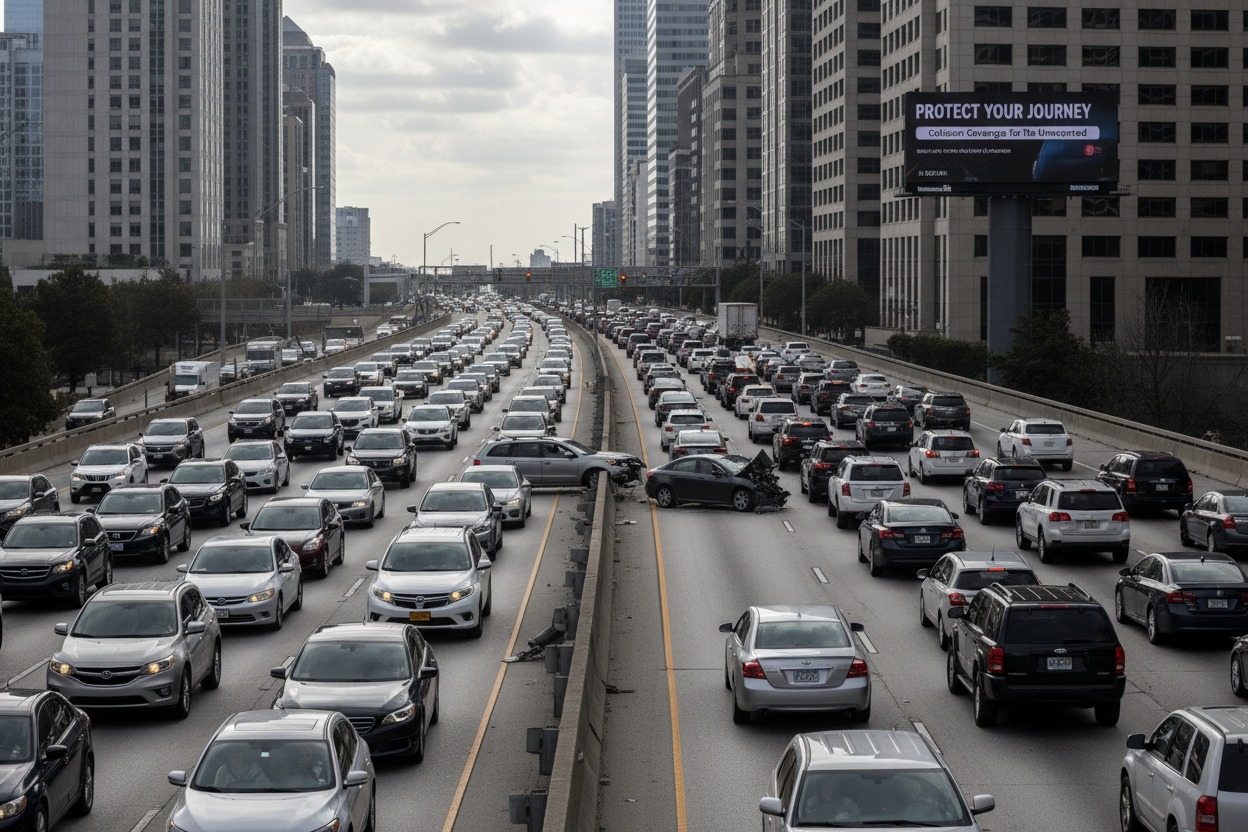
Image description: A wide shot of a busy highway during daytime traffic, symbolizing the everyday risk of collisions that this coverage is designed to protect against.
Collision coverage is the part of your car insurance policy that pays to repair or replace your vehicle after it’s damaged in an accident with another car or object, regardless of who caused the crash. Whether you rear-end another driver, hit a guardrail, or roll your car on an icy road, this coverage helps cover the repair bill or, if the damage is severe enough, the cost of replacing your vehicle altogether.
Image description: A close-up photo of a car’s front bumper with visible dents and scratches after a minor collision, parked on the side of a quiet street.
How Collision Coverage Works
Collision coverage kicks in after a covered accident involving your vehicle and another car, a fence, a tree, a pothole, or even a single-car rollover. Once you file a claim, your insurer sends an adjuster to assess the damage. If the repair cost exceeds your deductible, the insurer pays the difference up to your car’s actual cash value. If your car is declared a total loss, you’ll receive a payout based on its market value at the time of the accident, minus your deductible.
This coverage works independently of fault. Even if you caused the accident, collision coverage still pays out, which sets it apart from liability insurance that only covers damage you cause to others.
What Collision Coverage Includes
- Damage from hitting another vehicle
- Damage from hitting a stationary object, such as a fence, lamppost, or building
- Single-car accidents, including rollovers
- Damage from hitting a pothole or debris on the road
Image description: An insurance adjuster standing beside a damaged sedan in a repair shop, holding a clipboard and inspecting the dented hood.
What Collision Coverage Does Not Cover
Collision insurance has clear boundaries. It typically excludes:
- Weather and natural events: Hail, flooding, falling trees, or fire damage fall under comprehensive coverage, not collision.
- Theft and vandalism: These are also handled by comprehensive coverage.
- Injuries: Medical expenses for you or your passengers are covered separately by medical payments or personal injury protection (PIP).
- Damage to someone else’s property: That falls under your liability coverage.
- Normal wear and tear or mechanical failure: Collision coverage only applies to sudden, accident-related damage.
Because collision and comprehensive coverage handle different types of damage, many drivers carry both for fuller protection.
How Much Does Collision Coverage Cost?
The price of collision coverage depends on several factors:
- Your vehicle’s value: Newer or more expensive cars cost more to insure because repairs and replacements are pricier.
- Your deductible: Choosing a higher deductible, such as $1,000 instead of $500, usually lowers your premium.
- Your driving record: Drivers with a history of accidents or violations typically pay more.
- Where you live: Areas with higher traffic density or accident rates tend to have higher premiums.
On average, collision coverage adds a noticeable amount to a policy compared to liability-only coverage, but the exact cost varies widely between insurers and individual circumstances. Getting quotes from multiple providers is the best way to find an accurate number for your situation.

Image description: A person sitting at a kitchen table comparing printed car insurance quotes on a laptop screen, with a calculator nearby.
Do You Need Collision Coverage?
Collision coverage isn’t required by law in most places, but it may be required by your lender or leasing company if you’re financing or leasing your vehicle. Beyond legal requirements, here’s when it makes the most sense:
- You drive a newer or higher-value car: Repair costs can be significant, and collision coverage protects that investment.
- You couldn’t afford to replace your car out of pocket: If a totaled vehicle would create financial hardship, this coverage offers a safety net.
- You drive frequently in heavy traffic or bad weather: More time on the road means more exposure to accidents.
On the other hand, if you drive an older car worth only a few thousand dollars, the annual premium plus deductible might come close to or exceed the car’s value, making collision coverage less practical.
Choosing the Right Deductible
Your deductible is the amount you pay out of pocket before insurance covers the rest. A lower deductible means higher monthly premiums but less expense at claim time. A higher deductible lowers your premium but increases your upfront cost if you need to file a claim. The right balance depends on your savings cushion and how much risk you’re comfortable taking on.
Final Thoughts
Collision coverage protects one of your biggest assets: your vehicle. It steps in after accidents involving other cars or objects, covering repair or replacement costs no matter who’s at fault. Pairing it with comprehensive coverage rounds out your protection against weather, theft, and other non-collision risks. Before renewing or shopping for a policy, weigh your car’s value, your budget, and your driving habits to decide whether collision coverage is the right fit for you.