

Liability coverage is the part of your insurance policy that pays for bodily injury and property damage you cause to others in an at-fault accident. In simple terms, it protects other people’s medical bills, lost wages, and repair costs when you’re legally responsible for an accident. It does not pay for your own injuries or your own vehicle damage that’s where other types of coverage, like collision or medical payments, come in.
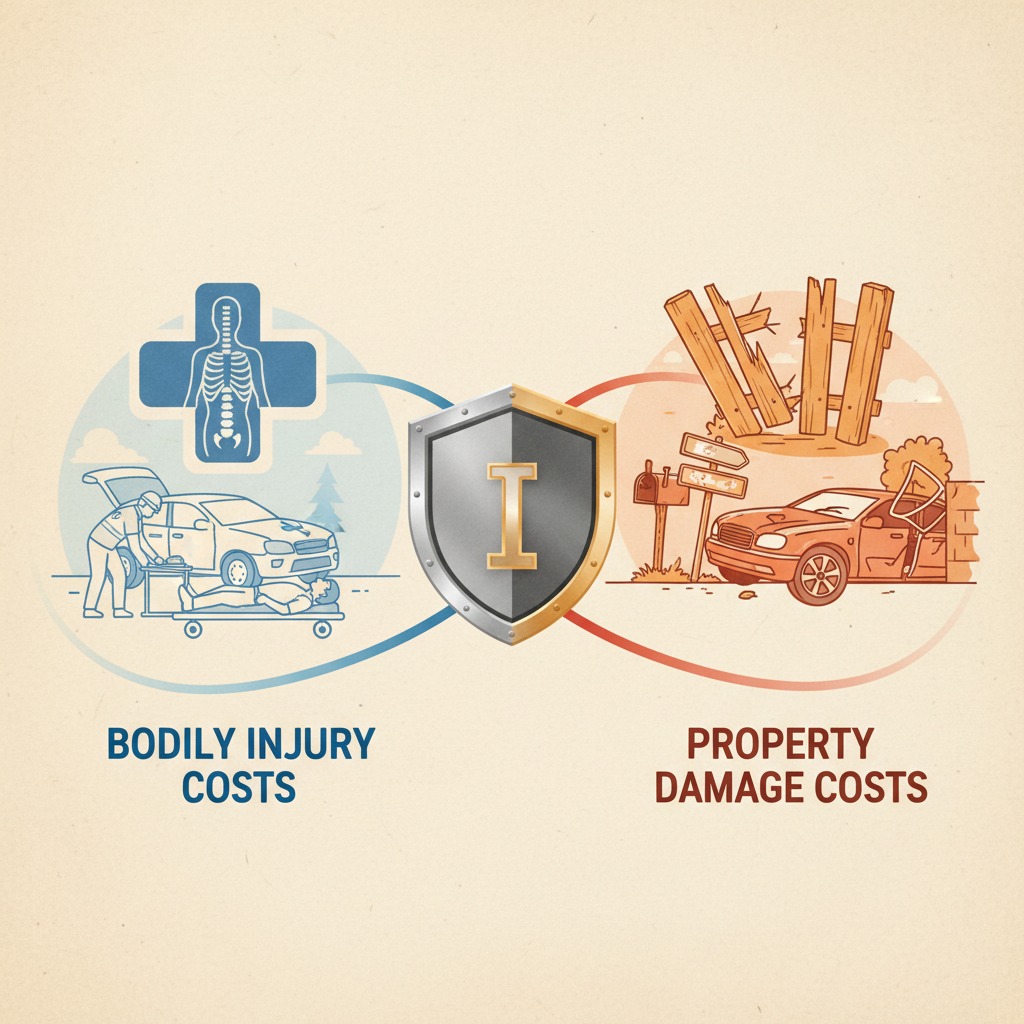
[Image description: A split illustration showing a car accident scene, with one side highlighting a medical cross icon representing bodily injury costs and the other side showing a damaged fence and vehicle representing property damage costs, connected by an insurance shield graphic.]
How Liability Coverage Works
When you’re found at fault for an accident, the people affected can file a claim against your liability coverage to recover their losses. Your insurer then steps in to pay for the damages, up to the limits of your policy. Without this coverage, you would be personally responsible for paying these costs out of pocket, which could include hospital bills, lost income, vehicle repairs, or even legal fees if you’re sued.
Liability coverage is typically split into two main categories:
1. Bodily Injury Liability
This portion covers medical expenses, rehabilitation costs, and lost wages for anyone injured in an accident you caused. It can also help cover legal defense costs if the injured party decides to take legal action against you. In serious cases involving long-term injuries, bodily injury liability can also extend to compensation for pain and suffering.
2. Property Damage Liability
This covers the cost of repairing or replacing another person’s property that was damaged in the accident. Most often, this means the other driver’s vehicle, but it can also include damage to fences, mailboxes, guardrails, buildings, or other structures involved in the crash.
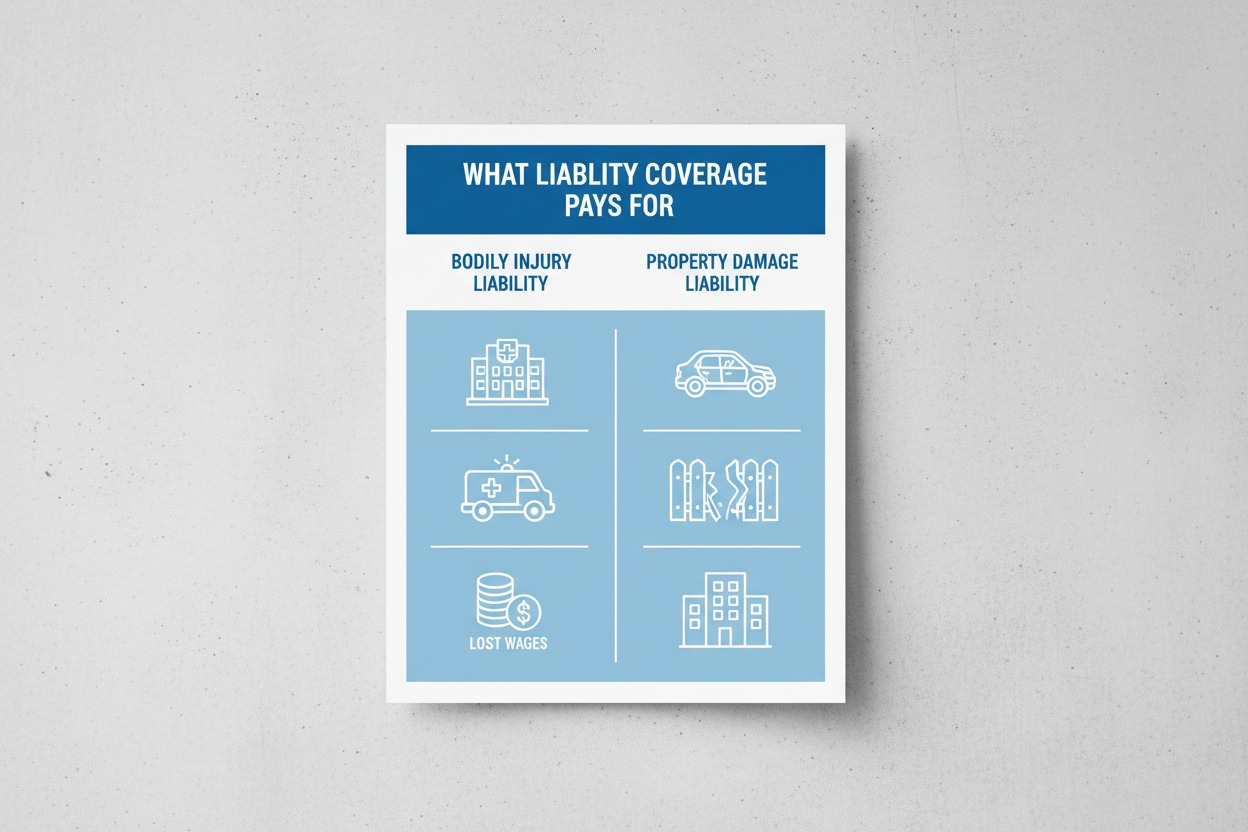
[Image description: A simple infographic with two labeled columns “Bodily Injury Liability” showing icons for hospital, ambulance, and wages, and “Property Damage Liability” showing icons for a car, a fence, and a building under a header reading “What Liability Coverage Pays For.”]
Understanding Liability Limits
Liability coverage is sold with set dollar limits, often shown as three numbers, such as 100/300/100. These numbers typically represent:
- $100,000 — maximum paid per person for bodily injury
- $300,000 — maximum paid per accident for bodily injury (all people combined)
- $100,000 — maximum paid per accident for property damage
If the cost of an accident exceeds these limits, you may be personally responsible for the remaining balance. This is why many drivers choose higher limits than the state-required minimum, especially if they own significant assets that could be at risk in a lawsuit.
Is Liability Coverage Required?
In most places, liability coverage is the minimum legal requirement to drive a vehicle. Lawmakers set minimum limits to ensure that drivers can cover at least a basic level of damage if they cause an accident. However, these minimums are often lower than what’s needed to fully cover a serious crash, which is why insurance professionals frequently recommend purchasing higher limits for better financial protection.
What Liability Coverage Does Not Cover
It’s just as important to understand the limits of this coverage. Liability insurance does not pay for:
- Your own injuries (use medical payments or personal injury protection instead)
- Damage to your own vehicle (use collision coverage instead)
- Theft or vandalism of your vehicle (use comprehensive coverage instead)
- Damage caused by an uninsured or underinsured driver (use uninsured motorist coverage instead)
Because of these gaps, liability coverage is usually paired with other policy types to create more complete financial protection.
Why Liability Coverage Matters
Accidents can happen even to the most careful drivers, and the financial consequences can be severe. A single accident involving serious injuries or significant property damage can easily cost tens of thousands of dollars. Liability coverage acts as a financial safety net, helping you avoid paying these costs directly from your savings, income, or future earnings.

[Image description: A person reviewing an insurance policy document at a desk, with a small shield icon overlaying the page to symbolize protection and financial security.]
Choosing the Right Liability Limits
When selecting liability coverage, consider:
- Your assets — Higher limits offer better protection if you have savings, property, or other assets that could be targeted in a lawsuit.
- Your driving habits — Frequent drivers or those in high-traffic areas may face higher accident risk.
- State requirements — Always check the minimum limits required where you live, then consider going beyond them.
- Your budget — Higher limits mean higher premiums, so balance protection with affordability.
Final Thoughts
Liability coverage is a foundational part of any insurance policy, designed to pay for bodily injury and property damage you cause to others in an at-fault accident. While it won’t cover your own losses, it plays a critical role in protecting your finances and meeting legal requirements. Reviewing your liability limits regularly especially after major life changes like buying a home or a new vehicle can help ensure you have the right level of protection.